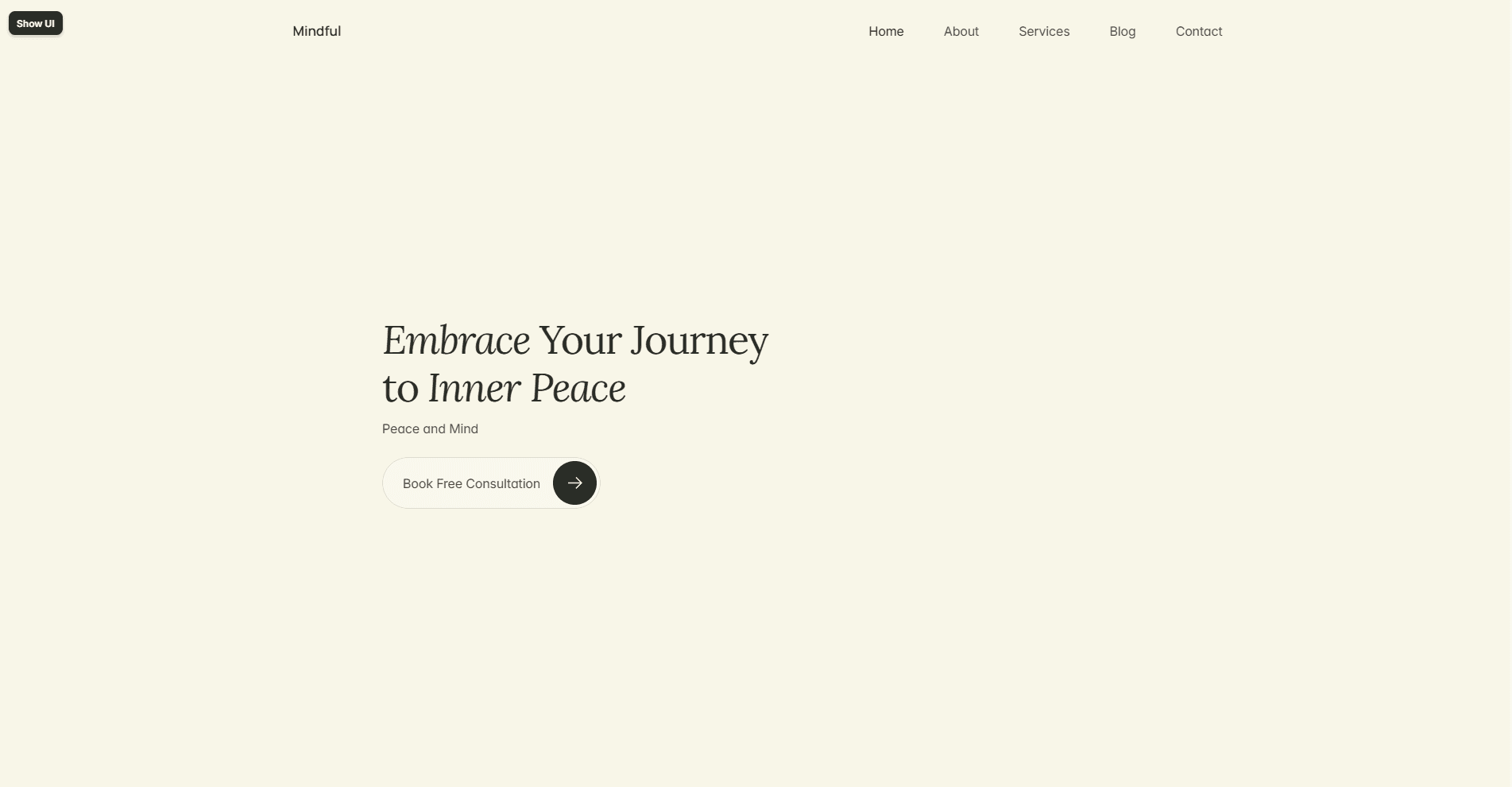
A therapy website built around a deceptively simple UX problem: people seeking mental health support are often in a vulnerable state when they land on the page, so the design cannot afford to feel clinical, overwhelming, or salesy. Every decision was made to lower anxiety rather than drive urgency. The off-white background, generous whitespace, and serif-meets-sans typography create a sense of calm before the visitor has read a single word. There are no stock photos of people crying on couches, no aggressive popups, no wall of credentials up front — just breathing room and a single, low-pressure CTA: a free consultation, not a commitment. The navigation is quiet and uncluttered, giving visitors full control over how they explore. The core UX challenge wasn't conversion in the traditional sense — it was making someone who is already hesitant feel safe enough to take one small step.